
E. coli is found in turds. Fact.
By Ruth D’Alessandro, The Wildlife Gardener The Wildlife Gardener is sad about the closure of Godstone Farm in Surrey due to the E. coli 0157’outbreak’, and because there are many children ill, some seriously, with the bug. This media story is close to my heart: the Junior Wildlife Gardeners have spent many happy hours at Godstone Farm and JWG1 contracted E. coli at a petting farm (not Godstone) at the age of 2. Now government adviser Hugh Pennington has pronounced that’parents should “think very hard” about letting children under five touch the animals at petting farms’, a move that I feel will further divorce children from the countryside, their own immune systems and knowing where our food comes from.
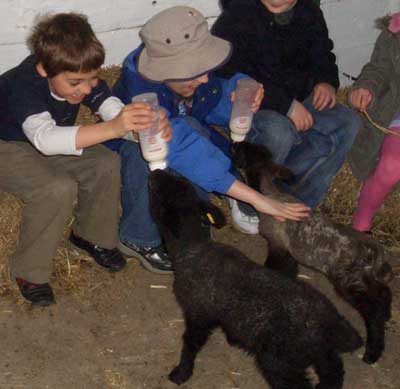
Perhaps the problem is not so much about touching animals, rather, where can pathogens be spread to? Let’s start with my own experience of E. coli. Junior Wildlife Gardener no. 1, her lovely godmother Sarah and I went for a day out at a children’s farm in Kent. It was a muddy November afternoon with few visitors. The animals were pleased to see us, or rather to see the buckets of feed containing cereals and chopped carrots that we bought at the farm shop. And feed the animals we did, paddling about in the inevitable soup of mud, rain, faeces and urine that pools in every farm in the country.
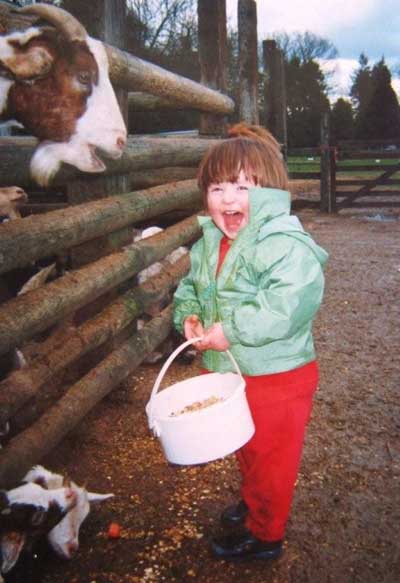
JWG1 then dropped a carrot into that murky soup. I watched her pick it up, certain that she would post it into the waiting mouth of a goat. Instead, quick as a flash, she posted it into her OWN mouth. And even quicker than a flash, I yanked the carrot out. We then tried very hard to get her to spit out the remaining’mud’. Miffed at losing her tasty carrot, and not wanting to spit for a mother who was behaving like the Drill Sergeant in Full Metal Jacket, JWG1 did what 2-year-olds do, and threw a massive tantrum, which of course produced plenty of saliva to wash the’mud’ down into her stomach. Oh dear. We couldn’t really do a lot, so we calmed JWG1 down and made sure we all washed our hands (and faces) carefully with soap and water afterwards. JWG1 ate a big pile of shepherd’s pie for tea that night, and went to bed happily, tired out. Then, at 3am, a pained crying started. Not wanting to be too graphic here, JWG1 had been sick all over her bed and had diarrhoea. She also had stomach cramps and was pale and miserable. Classic E. coli, and the cause was obvious. I treated her with lots of TLC and fluids, she was unwell for the best part of the week, then bounced back. I didn’t sue the farm. I didn’t blame the government. E. coli lives in the gut of most animals. It comes out in the faeces. If children put animal faeces in their mouths, they’re going to be ill. Now, should petting farms have play areas? Godstone Farm is famous for combining a hands-on animal experience with huge sandpits, climbing frames, slides and trim trails. The farm takes hygiene hyper-seriously and has done all it can to drive home the message that hands should be washed after touching animals. There are signs everywhere, and plenty of well-equipped washing stations around the farm. But what about those dirty little feet? Children can be paddling round the farmyard one minute, then, wearing those same pooey shoes, play in the sandpits and on the climbing frames. Toddlers dig in the sand and put their fingers in their mouths. They pull themselves up ladders that mucky little feet have just stepped on. And they put their fingers in their mouths again. Children’s hands may be darn near-sterile thanks to the excellent hand washing facilities, but their feet infected with a very nasty strain of bacteria that they are now treading all over the slides. Not hard to see how a pathogen like E. coli can spread round a park like Godstone Farm. It will be interesting to see, when analysis has been completed, which areas of Godstone Farm contain higher levels of E. coli bacteria. If analysts test just the animal pens, they may be missing a trick. Going a step further, children SHOULD be able to play in muck and not become ill. Have we become too reliant on’killing 99% of germs ” dead’ at home with anti-bacterial wipes, sprays and bleaches? Houses (not mine) are scrubbed, blitzed, steam-cleaned and sterilised on a weekly basis. Perfectly good food nearing a sell-by date is discarded. Mould is no longer cut off cheese. Where are the germs for our children’s immune systems to encounter? Currently, the must-have accessory in the Surrey Mummy’s Vuitton is a little squirty bottle of alcohol gel for Octavia and Kit to rub into their hands after they’ve got mucky. Rub INTO their hands? Shouldn’t they be washing AWAY the germs down a plughole with soap and water? If children’s immune systems are not regularly exposed to low level microbes, how on earth are they expected to cope when a really nasty one, like E.coli 0157 comes along? As a parent myself, I feel for those parents whose children are ill with E coli 0157 from Godstone Farm. To build up immune resistance couldn’t we let our kids get a bit dirtier on a daily basis? Could we ditch the bleach spray in favour of hot, soapy water? Give the children pets they have to clean out so that they are exposed to some fairly innocuous faeces? Children SHOULD be in contact with animals from an early age, but they should wash hands AND clean shoes. Feed farm animals but don’t put faeces in their mouths! Eat those yoghurts that are three days past the sell-by date. Pick an apple up off the ground, wipe it on your trousers and eat it. My grandmother used to say,’You have to eat a peck of dirt before you die’.’Yes Granny’, I said, crunching my way through some of her gritty kale,’but not all in one sitting.’
- Spurn Spawn! - 26th February, 2014
- Bluebells on wheels: axles of evil? - 2nd February, 2011
- Raising the ba: Wildlife and the Ancient Egyptian Book of the Dead - 8th January, 2011

I grew up on a farm, drank fresh milk still warm from the cows and ate freshly picked fruit unwashed and never washed hands before dinner. Didn’t do us any harm.
Oh, I get it now! I always cut off the mould and eat it, as certain persons in my household won’t. Now I understand.
Anyway, mouldy cheese is nicer!
Hurrah for cutting mould off cheese, then eating it. The cheese, not the mould.
Loved this post, thank you.
PS. I DO cut the mould off cheese
Hurrah for common sense, mud and some nice stinky animals in one’s life! See what a fine young lady my gorgeous goddaughter is becoming. And not a whiff of bleach about her! XX
When I was a child in the ‘sixties, my friends and I regularly made mud pies, digging up soil from the garden – in which dogs and cats roamed – and took no ill-effects.
My elder son did the same in the late ‘seventies-early eighties.
My younger son, born in 1992, ate sand on the beach at St.Ives (Cornwall) and later hand-fed goats at Paradise Park in Cornwall.
He also bottle-fed orphaned lambs on a Northumbrian farm.
Surely, life is a risk and we cannot guard constantly against, ‘bugs.’
Deny our children the opportunity to connect with REAL animals and you deny them the opportunity to connect with the world at large.
Might as well deny them a pet dog/cat/rabbit/hamster,rat/mouse, whatever.
Simply observe basic rules of hand-washing……
Thanks for your comments, gents. It’s a known fact that farmers’ children, playing all day in muck have the best immunity. My mum used to buy reject cracked eggs, keep them in a warm conservatory then make chocolate mousse with them raw! We only started getting ill when she decided she really ought to be a bit more houseproud and clean up with bleach etc!
I also hear that there are plans afoot to sue Godstone Farm. Great – put it out of business and deny thousands of children the simple pleasures of a farm. And when one petting farm goes, others will surely follow. Ah well, there’s always Legoland – you can wipe lumps of coloured plastic down with antiseptic, can’t you…?
I grew up on a farm. We used to play on the farm, in and around where the animals were. I don’t remember washing my hands all the time and I didn’t have any serious illnesses.
Excellent post, couldn’t agree more.
You’re leaning against an open door here, Ruth.
Antiseptic parents bringing up antiseptic children are protecting themselves against eveything except real life, and when real life intrudes, guess what gets the blame.
We also had good times at Godstone Farm, and hope they get through this.