
Is there a legal right to collect firewood?

- Complaining about the Mainland - 17th August, 2024
- New island designation – is it just greenwash? - 26th April, 2024
- Police and Crime Commissioners – a solution or a problem? - 21st April, 2024
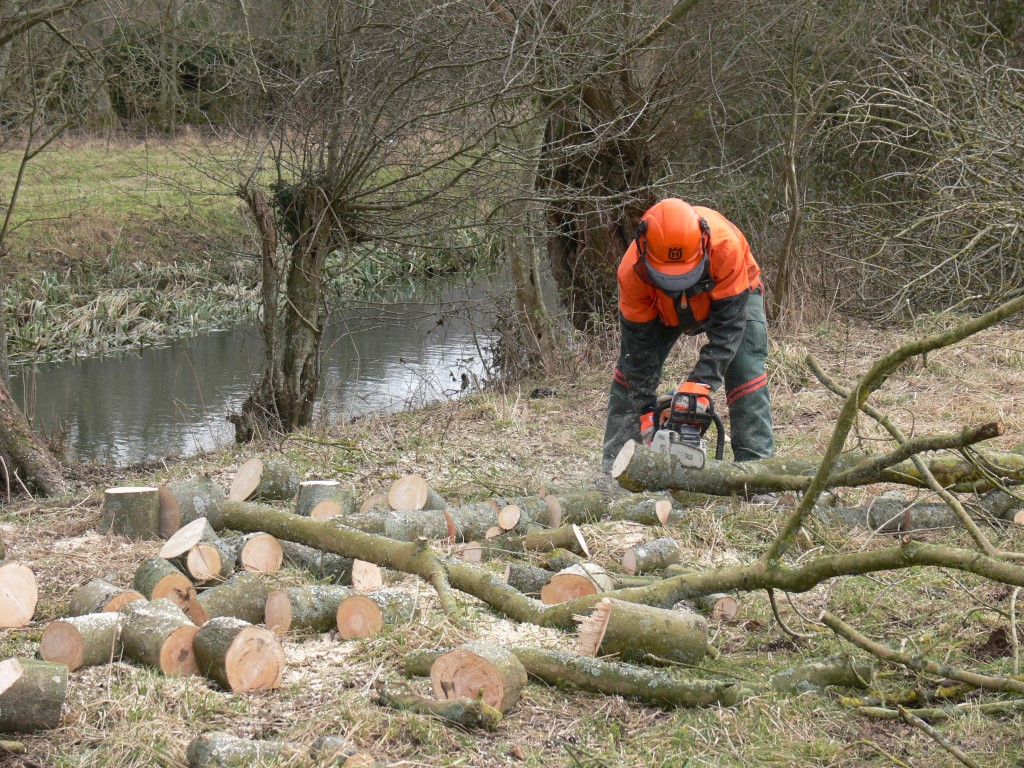
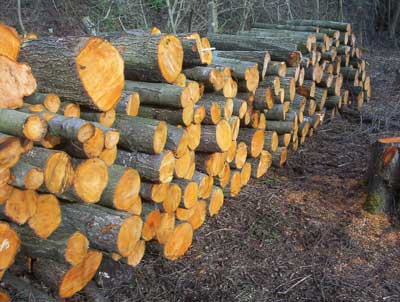
Round about this time of year The Ranger always gets a query or two about firewood. There’s the idea going around, rather conveniently, that there is a legal right for anyone to take fallen wood for firewood.
A typical enquiry was this one, from Ranger reader Graham:
I understand that common folk such as myself were given the right to collect firewood for personal use from common land as part of the great Magna Carta. Or have these rights gradually disappeared as land has been ‘stolen’ by the landed gentry?
So, is he right?
Actually, no. There is no general right in English law to collect wood for any purpose. In simple terms, all wood belongs to somebody, normally the person who owns the tree it grew on. You can’t lawfully take it away without their permission. It’s as simple as that. The fact that plenty of people do help themselves to fallen wood doesn’t make it legally right that they do so.
It’s a very practical way of getting rid of surplus wood, as any ranger or forester knows. If someone asks you for your employers’ wood, you have to refuse. But if you haven’t been told to bring back the firewood, then rather than sweat and gather all your logs up into the trailer and lug them back to the depot, just pile them neatly by the side of the path. Next morning when you return to the worksite they will have mysteriously evaporated. Very convenient, but not in any way a legal right.
Collecting wood on common land
However, as with all these things, there are subtleties to this, and exceptions. Graham, above, alludes to one of these when he mentions common land. There actually can be a right for certain people to collect certain sorts of wood from certain areas of common land. The biggest and best-known of these is perhaps Epping Forest – see comment below. But it’s very unusual. One problem is that it’s very hard to know what land is common land and what isn’t, and who has these rights and who does not. Common land is not the same as public land, for example. Common land is a really complex and arcane area of law.
However, the reason this is more-or-less irrelevant is because such rights of common are now very rare in England, and if you have such a right you will probably know about it. So assuming you don’t have such a right let’s forget that.
The Magna Carta – a red herring
But what about the Magna Carta? This one is – pardon the pun – an old chestnut. The Telegraph, last October, was trumpeting magnificently about how “the Forestry Commission has scrapped the right, enshrined in the Great Charter at Runneymede in 1215, in order to stop people picking firewood from woodland.” However it then rather feebly goes on to explain how previously wood-gatherers had to buy a licence to collect wood, and now they can’t. So if you’re buying a licence, it’s not much of a sacred right, is it? Anyway, if you look at the actual document it doesn’t say anything of the sort. Still, the Magna Carta is to countryside law debates what Godwin’s Law is to much online discussion – if someone won’t stop going on about King John and Runnymede it’s fairly safe to assume they are barmy and ignore them.
The four ‘f’s
Finally, and not entirely relevantly, there is that splendid bit of law called ‘the “Four F’s”‘. I have blogged about this before. It’s a little known but reassuringly archaic fact that under English common law you can normally pick the “Four F’s”, if growing wild – fruit, fungi, flowers and foliage, for non-commercial use, anywhere where you can legally go. Firewood is not the fifth F, by the way. Sorry. Now this does not mean that people can enter land unlawfully, but in areas where they can lawfully be – for example on a country park, or walking along a right of way – they are entitled to collect and take away the Four Fs. This is a right I exercised myself last Christmas – I went into a local woodland, open to the public, and collected holly twigs and ivy strands to decorate my house. Actually, as it happens after twelfth night had gone I burnt some of them, so I suppose in a way I was legally collecting fuel for the fire as of right.


This article is wrong by virtue of Thoburn vs Sunderland City Council 2000, in which Laws L J ruled an ordinary statute act cannot implicitly repeal a Constitutional Treaty. Thus any law recently passed giving the Forestry Commission powers to ban the Right of Estovers is unconstitutional and illegal by virtue of Laws L J’s 2000 ruling, as is any law allowing them to charge for a ‘licence’, which is also unconstitutional. Magna Carta does not give any Landowner the right to charge for Magna Carta liberties, its an absolute right.
“If someone won’t stop going on about King John and Runnymede it’s fairly safe to assume they are barmy and ignore them.”
About 8 months ago due to hi winds some bows broke off some trees on the side of the road , the road was blocked, a team of chaps with a big chipper cleared the road they chipped all the brash under 4/5 in and left the heavier stuff on the verge it’s was there for 8 months until I decided to log it up. But first I sought the opinion of 2 locals walking in this country back lane, they both said go for it, I realise they can’t give me permission to take another’s property. But this was a road verge outside the field boundary. Getting to my point whilst logging the last bit I was approached by a man carrying a 3ft hammer shaft and a phone recording I assume, he offered me a quiet place where no one would ever find me!
I offered him the wood I had cut if it was his he told me to F off, so I did.
On numerous occasions I have asked council workers what they do with the stuff the don’t chip they always say if we don’t take it help yourself, is this anyone else’s experience( not including the offer of a nice resting place )?
In the storms last autumn (2021) I did the same on 4 separate trees in the local area, sought permission from the nearest house in one case as the tree had been part of their hedge, but fallen roadside and cleared by the council. No one complained and the landowner of the tree was happy.
This was a excellent informative post you have shared on this page about the legal right of firewood because all wood belongs to somebody, normally the person who owns the tree it grew on. You can’t lawfully take it away without their permission.
Thanks.
so let me get this straight lol i cant take what i want but are for fathers and pilgrams can just cut down trees and start building before money and then start a system thats imaginary were i have to pay for something they just took ,but yet they didnt pay but i have too ??????????????????im confused ?????????????i WANT A CORRECT AWNSER NOT DONTOLD AWNSER!
Hi Joshua. I’m assuming from your writing style you are an American. If so, then your forefathers and ‘pilgrims’ did indeed take wood from trees without paying for it. But you may have forgotten that there were in fact people already living in and around those trees who already considered them home.
I think I prefer the system of money – it means both sides of the deal walk away with something. Presumably it was developed because “taking” tends to leave the owner feeling put out, and often wanting to ‘retake’ or retailiate in some way…ok they don’t tend to come and nick your sheep as recompense these days, but being hauled through a legal system is still pretty grim.
“the imaginary system” is just bartering, which is ancient and logical and what people do when they want to live peacefully with their neighbours.
People referring to the Magna Carta and trying to protect their traditional cultural rights against corporations (often foreign corporations) are “barmy and ignore them” ???
What does that make you ?
I think you’ll find that if it’s in the Magna Carta it’s OK , because the Magna Carta is a Treaty and can’t be changed , it’s law !
But what if it isn’t in the Magna Carta? What then?
I think the important consideration there is that this article doesn’t actually say what IS in the Magna Carta. I’m here because I’ve just been listening to an argument that says it is.
You can’t have a field or some woodland unless you’ve built property on it. How about that? Fuck this outdated landed gentry shit. It’s all our planet. Not some private collector’s hoarding his legally purchased art
I asked a lady, if the fallen branch, in her garden, was in the way and could I have it, if removed for free. She replied YES and the other broken 20 trees, at the bottom of the paddock, are yours if you want them.
I have taken about 5 tonne so far………..
I asked a woodwork joiner, what do you do with off cuts…….. get 2 skips a week was the reply………
NOT ANY MORE……..
Land Rover, trailer and Stihl.
(not real name)
You have a right to take whatever wood you want from wherever you want. Liberties are not given but taken. It may be the case that other people have the right to take legal action against you for your wood collection activities but that would be unproductive to all parties involved and is not likely to happen unless they have a major problem with ‘wood loss’ or they are particularly angry by nature. Judges are not normally unreasonable so being in court is not a big worry. I get my wood from land owned by trusts, railways and the council and nobody cares a jot. I’m happy that what I do is morally OK even if it opens up other people’s rights to make my life difficult.
Theft is theft how ever you dress it up no exceptions. If you ask permission most people are reasonable but if you steal you deserve to be prosecuted.
The council stole a rough sleepers sleeping bag now he’s dead .. were the council right to take possessions without permission? Or are there exceptions .. law and Justice are only joined by the size of a wallet
So then, after all this discussion it seems clear, if it’s not yours, it’s not yours. What I would like to know though, what is the likely penalty going to be if you do get prosecuted for illegally taking firewood?
I would just like to say that we invested an awful lot of money into woodland that has a right of way through it. We are trying to make it commercially viable and hence wood has a very real commercial value to us.
I would like to point out that we do not except taking any wood from our private woodland. Even twigs and coppice and the suchlike we use on our biomass (another hard earned investment). If you want wood, buy your own woodland like we had to or go and buy it. I think its about £3 for a bag of kindling. I do not see why the public has privilege over something we own and work hard for. By all means use it as a public right of way, but don’t theft. It is not a free for all and we are not a charity.
It must be hard work letting those trees grow,
Just because you gave in to the pyramid scheme that is land ownership in the current economic climate, it does not give you the moral obligation to “owning” the natural processes that happen without intervention within an area that is abstracted from yourself
Moral or not, In your opinion that is. Ownership of the land does mean that you legally own the wood on it.
Did you buy your own house? Do you rent? If so would you be happy for me to pitch a tent in your garden. And why do you pay to live in a house where apparently I have just as much right as you to be there going on your view
Hi. I’ve just come across this interesting discussion. Fascinating to read about the old and new laws, bylaws etc. I just wanted to give a gentle reminder to check woodpiles before you remove them especially in the late autumn/winter, as hedgehogs, bees, butterflies and other creatures may well be hibernating/dormant hidden beneath. If the logs are recently cut, then hopefully nothing will be there yet and they’ll be ok to remove, but old piles, especially if starting to rot/support funghi are really important shelters (and don’t burn so well anyway). Also, bear in mind that on nature reserves wood piles are often deliberately left for this purpose. So, like bonfires, please just check first, before removing. That’s all that’s needed – thanks!
Hi, I am wanting to decorate my house this season with some holly, I have seen people in the past collecting, but I don’t want to do anything i shouldn’t be doing. I will not be burning it, as I do not have a fire.
If you’re collecting it from a place you have a right to be, that will probably be fine.
Take 2 bags…….
I clear woodlands of dead and fallen trees, (where I shoot) I ask everyone I see, with piles of wood, if I can remove it, for them, obviously for free, I look on ebay, for free firewood and I take everything I see fallen, on the roadside, for my Rayburn.
I live very warm, never buy wood and smile when I drive away, with my latest hoard.
People do a lot worse, in this crazy world we live in.
I clean it, for free, no charge, no hidden extras, no small print, nothing to sign and very safely, with personal strict H&S risk assessments.
Happy Christmas 2015 and a warm 2016, to you all…………………….
Land Rover, trailer and Stihl
(not real name)
Apologies for adding to such an old post, but it has come close to the top of searches I have done on the subject so others may well be finding it. Very useful, thank you.
One of the exceptions, however, seems to be Epping Forest, but only because the owners (the City of London) have enshrined the old right to take a faggot of wood a day in current bylaw 3(4). A faggot (stop sniggering on the back row) was a bundle 3ft long and 2ft in circumference; the metric equivalent in the bylaw is up to 12kg of dead, loose or drift wood, no more than 91 cm in length and no stick more than 5cm in diameter.
I looked it up because I need to make a trip out to Epping tomorrow anyway, thought I’d go for a walk in the forest, and wondered whether I could collect wood for my fireplace. Provided the weather holds out, I will exercise my ancient rights…
The Ranger adds: Very good discovery Mike. The current byelaws for Epping Forest can be found here and do indeed read in part: “[Permitted:] the collection in any one day of no more than 12 kg of loose, dead or driftwood, of which no piece shall exceed 5 cm in diameter and 91 cm in length.”
The link is broken, so here is the current link to the byelaw https://www.cityoflondon.gov.uk/things-to-do/green-spaces/epping-forest/visitor-information/Pages/byelaws.aspx
It currently reads;
Removing from the forest. (4) Taking or moving any substance in or from the Forest, save with the previous written consent of the Conservators, PROVIDED that this byelaw shall not apply to the collection in any one day of no more than 12 kg of loose, dead or driftwood, of which no piece shall exceed 5 cm in diameter and 91 cm in length.
Many thanks for spotting that, I’ve corrected the link.
I take a big Sainsbury’s bag when I walk the dog in the woods and fill it with twigs and fallen branches that I can carry and feel so darn guilty. Nobody has queried it other than to ask if I have a log burner, which I don’t. I tell them a few are for the dog ( they aren’t) and the rest are kindling for the open fire. The logs crackle and burn like something from Hogwarts! Brilliant. So guilty of theft from this article but will carry on until a ranger says no more. Tried the council website to see if I could buy a licence but think there is no department ( yet!!! ) for it and I’m not going to call them to create one! Nothing like free firewood. Love it!
Slightly off topic…
Would collecting birch sap be OK (non commercial)?
Same answer – technically not legal as it belongs to someone. And not covered by the ‘four Fs’. But in practice… very unlikely to be stopped.
Permission is necessary from the council before collecting firewood.
Because common people do not have right to collect wood. The other consideration is that some council have a “clean air” policy and therefore you can only use logs with a low smoke “output”… would need to check that angle too
Permission will be needed from the land owner who in a lot of cases may not be the council as most land that is percieved to be open to walkers is privately owned.
simple question ,,, simple answer ,,,,, yes or no
Not all wood has ownership. In this area of Cornwall, there are substantial areas of land with no known ownership and hence I think it follows that wood on this land also has no known ownership.
That’s not the case. Just because nobody knows who owns it, that doesn’t mean that nobody does own it or is responsible. All land is owned by somebody, even if that is not known. There are big areas of unregistered land throughout the country, that’s pretty normal. It just means that the owner isn’t acknowledging it or maybe doesn’t even know they own it. And in many cases, even for land, such as common land, that really isn’t ‘owned’ by anybody, there will be authorities with the duty to look after it in various ways.
Hi Doug, what area of Cornwall is this you speak of? I’m interested in land that nobody owns or at least they don’t know they own. I think you might be too, we should talk
Simple answer is in the article, in the paragraph that starts “Actually, no”.
Does a tree preservation order still apply to a tree that has fallen over?
Possibly, but probably not. There might also be a requirement to replace it. Either way you would need to get the advice of your local tree officer to be sure.
If it aint your land, it aint your wood!
Have been collecting firewood from my local woods for many years now ,which are council owned,i have contacted them to ask for permission to collect any felled trees and they forwarded it on to there green department,that was 12 months ago,and still awaiting reply.So i usually go when its quiet and collect bits,not massive loads,just to keep us ticking over,i mean who is going to say anything to you ,unless you bump into ranger which is very unlikely,my attitude is ,if you dont take it someone else will,i know its wrong to do so,but theres nothing better than sittng next to a roaring fire with the wood you collected yourself.
OK, so heres a question, I live at Runneymede, and I collect fire wood for heating my house, this wood is fallen and I just take what I need, does this make me either a thief, or a commoner?
Well, if you don’t have the permission of the owner of the wood, and you are not aware of any right to collect it that might be, say, associated with your property or your family, then no, you are not taking it by right and the owner of the wood could argue that you had stolen it. But they probably wouldn’t.
I have been collecting wood from roadside verges over the winter…..for my canal boat wood burner.
I also use a chainsaw where necessary to cut it up small enough to get in my car.
If I didn’t do this……then someone else would !
Maria
Hello,
If I get caught pinching fallen wood from the local park, what is the worst that will happen?
I may be too late to make a useful contribution but the term “estover” covers the rights of a tenant to take wood from his/ her tenanted land. It’s a very old right . . . .and may no longer count in new leases.
Thanks for this clarification (and also the answer to a clue from the 25th November Telegraph crossword!)
I now know I must resist the urge to remove branches from a large limb that has fallen across a bridleway. A shame though as it would have been great for our woodburner and good exercise too!
if its fallen across a right of way then clear it up as its impeding your and everyone elses right of way!!
I live in the north of Ireland on the Antrim coast. There are lots of privately owned and NT woodlands near me and I have been taking wood from them for many years now. I was brought up to believe if it was worth taking then it was worth asking for but maybe not in the case of taking fire wood! I had been taking fallen trees of a near by wood for a year or so and one day met the owner. I asked him if he minded me in taking fire wood and he told me that I shouldn’t have asked! He went on to say that he didn’t mind but not that I had asked he a legal obligation to now stop me from doing it as he was now liable if I where to be injured and tried to make a claim ageist him. So some time’s asking might not always be the best option.
Thanks for this information. We’re moving out into the “country” fairly soon (by which I mean 1 mile’s walk from a bus stop and 1/2 a mile from so-called “civilisation.”) Our new house has a log burner, and has 2 acres of adjoining wood land which is privately owned, previously National Trust (and still subject to their covenants) and seemingly abandoned. I’m planning to attempt to purchase the land, though tracing the current owners has been a bit of a challenge so far.
As an aside, I thought flowers were protected by the Floristry Commision? 😉
What country are these laws for? I’m trying to find out if I can cut wood from a fallen tree over here in Canada.
For England and Wales.
in canada you can cut any tree along a railway or powerline, you need a permit for a christmas tree, rules do vary from province to province but here in bc we head up to crown land and chop up dead fall. find logging areas and often access slash piles but thats a dont ask cause its not legal – the forestry company own the wood even if they are only goign to burn it! but if you ask they have to say no because of liability and safety. i live in a semi rural area in bc so we get wood from varying sources, lots of pine beetle kill deadfall a local charity for kids with addictions has them chopping wood you can call up local tree felling companies as it often costs them money to dump wood. so they are often delighted if you want it.
The council have chopped up a fallen tree and left some logs lying in a pile for months now. It would make my Dad giddy with joy if I turned up with a boot full of logs. I’m assuming that the council have abandoned it but how can I go about finding out if it’s “free”?
Ask the council: it’s their wood. They probably won’t mind but you’d need to ask.
Are we allowed to collect wood which is bobbing along in estuaries and rivers? We have punt that would be suitable for the job. Much of this wood would be hazardous to other craft anyway and ends up blocking waterways.
That’s a very good question. In estuaries and tidal waters, I’d say probably yes. In rivers, maybe not. But I’m not sure either way.
Properties that have river side frontage often come with rights (and sometimes obligations) to collect items floating past. That might help!
Dear ranger whats the wood collecting licence called and is it the forestry or local council that you apply to i live in barnsley south yorks thanks shaun
You can’t necessarily get such a licence. All wood belongs to somebody and you will need to buy it – some landowners issue a licence but not many. If you want to collect wood legally you need the permission of the landowner. So if the wood is on council land, ask the council. if it is on Forestry Commission land, ask the Commission. And if it’s on private land, ask whoever owns it.
dear sir.
i live in Arundel west sussex,there is a woodland opp my property,an old oak tree came down some years ago,am i able to gather wood from this tree that is on the ground and use for our open fire,this may be forestry commission land but not quite sure,post code bn18 area i have a map ref 495726 107218. could you please advise.
No, not unless the owner says so. There’s full information in the article above.
The Forestry Commission needs to stop producing bog rolls by massive pollution and replant our stolen heritage of broadleaf woodland.
Ranger I admire your patience and thanks for the useful info. So my understanding is that if I should find wood that has been cut down in the course of clearing a public bridleway, and that the wood has been stacked up there on the public bridleway (not easily accessible on foot) for the last 8 months I cannot legally remove it, even in the dead of night. Nudge, Nudge, say no more!
I cant afford Central Heating oil so I collect fallen wood. A great deal is rotten through and wouldn’t burn well and much is host to fungi of all shapes and sizes as well as providing food and shelter to a vast array of living organisms. Collecting firewood with knowledge and sensitivity
is vital for maintenance of your ecosystem. It’s a shame that woodland is under such pressure that so simple a task can adversly influence the environment.
I live in s13,there are lots of cut timber laying about in council woods,i will purchase this if i can find who to contact,thanks
I think that if the wood is already dead and fallen then it is fine. I don’t think that anybody owns this wood and it helps to keep the countryside tidy 🙂
The Ranger responds: That’s because you work for a firewood company. But it doesn’t make it legal.
I do work for a firewood company but we do purchase our logs legally from a trusted supplier. Legal or not, I just don’t see the harm in collecting dead wood.
Deadwood is essential in a woodland ecology especially the larger pieces so yes there is harm in removing it! The deadwood helps recycle nutrients, provides a diverse range of ecological niches for many woodland inverts, reptiles and amphibians which provide food for birds, mammals etc and it helps regulate humidity and run off amongst other things!
http://www.forestry.gov.uk/pdf/FCPG020.pdf/$FILE/FCPG020.pdf
Confirms my point. Be careful and considerate. J.W-B
Following the thread on estovers: I believe a friend of mine has mentioned that they have an estover resulting from the purchase of a property.
How can this be proven correct ??
His age is a restriction and I would like to know if I can gather on his behalf and he then consumes within his property to which the estover is held ( see use of chainsaw and heavy trailers )
Thanks in advance.
Such rights are often very ancient in origin and complex in implementation. In practice you need to consider what the likelihood of a challenge is. If nobody is likely to complain then there is only a low risk of any legal trouble. But if you think it is still worth settling for sure, the only way to determine the rights for sure is to go to court – but as this is unlikely to be either necessary or desirable, if it’s important to you, you need to get a solicitor or land agent to look at the deeds or other documents involved, and give you a formal opinion.
Collection of fallen wood from roadside verges is a socially beneficial activity and should be made legally acceptable under local bylaws. It saves the Council labour costs in clearance and tidies up the highway.
Welll i have to say your link “a partial explanation here” talks about funeral make up on corpses, has little to o with this topic
The ranger responds: What? That link’s changed, thanks for the tip-off Ren. I’ll update it if I can find the original.
Thanks, Ranger.
That makes sense.
All very interesting. I live in a boat with a woodburning stove, on a river in a rural area. Driftwood floats past – does this belong to the navigation authority? Flooding deposits it on the banks – does it then belong to the landowner?
The ranger responds: good questions. I suspect that the answer in both cases is yes. Also if the flotsam actually has an identifiable owner than it could belong to them. This works both ways: if a big obstruction floated downstream and damaged your boat, you might have a claim against somebody who negligently put it into the channel. I’d also note that there is often a lot of custom and practice associated with rivers and estuaries, so local arrangements may well prevail.
Very interesting article, but I didn’t understand the “If someone asks you for wood, you have to refuse” sentence.
The Ranger responds: this is in the context of a ranger working on behalf of, say, a local council. You can’t give council property away. But you don’t have to be very vigilant about keeping it, either.
I can only see this being needed in survival situations as you can get firewood as a bi-prouct of other industies like tree surgery.
Here in the UK a person has the legal right to collect firewood off common land but only as much as they need rto heat their home. This is under common law.
The Ranger responds: no, they don’t. The article explains why not.
Mark
You are right and the ‘commoner’ is the owner of the property to which the right of common is attached. The owner collects his or her wood from the common land – which is owned by another ‘person’.
In the past rights of common could be severed from the property by: a) selling it without the right – the commoner retains the right or b) by selling the right of common (severing it from the land. They became ‘rights in gross’
Nowadays such severance is not allowed under the Commons Act 2006 except in limited circumstances, eg to Natural England. My Common Lands Handbook gives more detail.
I think that the right to collect firewood etc. was a specific right attached to the ownership of various properties which gave “commoners” rights to collect wood, exercise their pigs or whatever, but the point is that “Commoner” did not mean just anybody, as people probably mistakenly imagine.
The right to roam legislation (CROW Act 2000) enables members of the public to roam on “open land” but not where types of land access are restricted. However, whilst you may be right about the four Fs under common law, you may be in breach of statute law if you pick wild flowers. Generally, wild plants are protected from being dug up and certain flowers, if not all, are protected, eg wild orchids
The Ranger responds: I didn’t go into that as the post would have gone over the page! But yes, you are right, CROW access land is included and by using the new right of access you do take with you your right to collect the Four Fs. But other statutory provisions can over-ride that right, for example the Wildlife and Countryside Act would indeed make it an offence to pick any Schedule 8 plant; and it is in any case illegal under that Act to without the owners consent uproot any wild plant regardless of species. But not all orchids are protected, despite what people think.
Common land and rights of common, eg estovers (right to collect wood) are relatively easy to identify since they should be registered under the Commons Registration Act 1965, the Commons (Rectification of Registers) Act 1989 and now the Commmons Act 2006. Local authorities keep the registers, eg county councils.
Many mistakes were made from 1965 – hence the latest attempt to put things right is underway (2006 Act).
The Ranger responds: this is true – but I wouldn’t say it was easy for the average person on the ground. It remains pretty difficult to know what commoning rights exist and what is common land without specifically seeking out the definitive answer in this way. If you’re out looking for wood you might not have had the foresight to have consulted the Commons Registration Authority in advance for every site you visit.
Now there’s a business idea!
Foliage, to me, would require that the leaves are attached. But frankly I doubt anyone’s going to split hairs to that extent. Not until you start a commercial twig wholesale operation, anyway.
Very interesting reading for someone with a recently-acquired woodburner. I have gone foraging for kindling twigs. And yes – we joked that the 4th F was firewood. But what’s the definition of foliage? Are twigs foliage with the leaves fallen off?